Evolution Design Group
The Restorative Home Index™

Designing homes that give something back

The wellbeing philosophy at the heart of our interior design practice.

The Restorative Home Index™

There is a particular quality the finest homes share that has little to do with scale, budget, or style. They simply feel good to live in.

Threaded through every layer of the Living Home Framework™ is a deeper question: not only does this home work, but how does it contribute to the well-being of the people who live there?

The Restorative Home Index™ is the standard of care we bring to that question. It is not a checklist or certification. It is the lens through which we consider the spatial, material, and sensory decisions that shape the experience of home.

It asks:

Does this space support clarity or add unnecessary visual and sensory noise?
Will these materials contribute to a healthier indoor environment?
Will this choice perform well and age well over time?
Does the way this space is planned make everyday life easier?
At the end of a long day, does this home provide a place to truly settle in?

The philosophy grew from a simple understanding: our homes are not just the backdrop to our lives. We interact with them every day. The materials that surround us, the light we wake to, the spaces we move through, and the way our homes accommodate our routines all contribute to our daily experience.

Every home we design is considered through this lens. It influences how we plan the floor plan, evaluate materials, consider light and sensory conditions, and make the many decisions that ultimately determine what it will be like to live there.

Because creating a beautiful home is only part of the goal.

Creating a home that contributes to the quality of your everyday life is what matters most.

Spatial decisions that support daily life

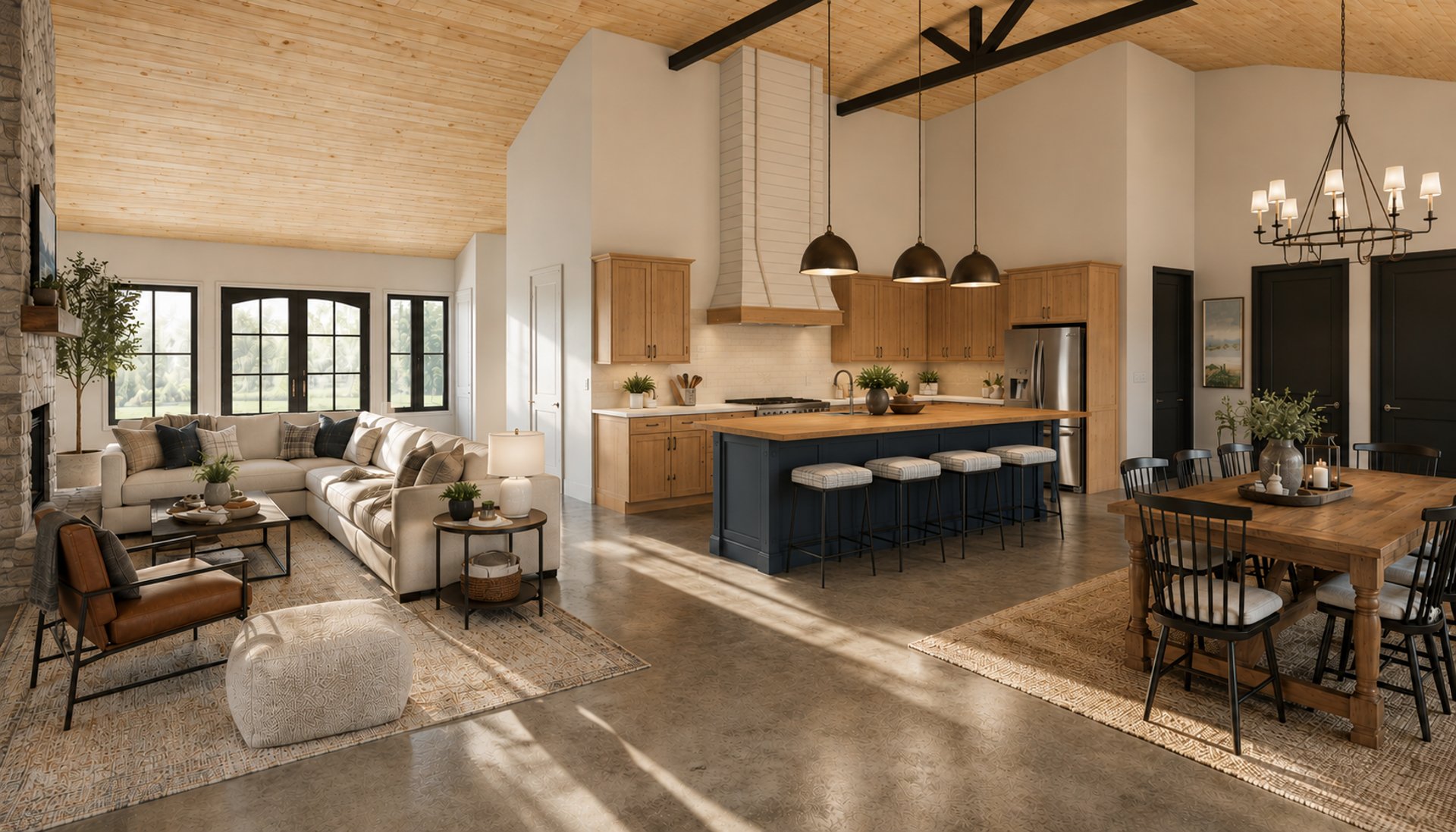
How a home is planned has a direct impact on how easily daily life moves through it. Circulation, room relationships, storage, furniture placement, and lighting are considered early because these decisions affect everything that follows.

A well-planned home anticipates everyday needs rather than asking the people who live there to continually adapt to the space.
Light as a design material

Light is considered from the earliest stages of design. Window placement, orientation, daylight, glare, and the transition to artificial light throughout the evening all influence how a space is experienced.

We consider natural and artificial light together, creating environments that respond to the changing needs of the people who live there throughout the day.

The Materials We Specify

And why they matter

The materials we bring into a home are selected for more than appearance. We consider what they are made from, how they affect the indoor environment, how they perform, how they age, and what it will take to maintain or replace them over time.

Natural Plaster & Limewash
Mineral-based finishes that bring depth and character to the walls they cover.

Plaster and limewash interact beautifully with natural light, creating subtle variation that conventional painted surfaces cannot replicate. Depending on the product and application, mineral-based finishes can also offer high vapor permeability and lower-emitting alternatives to many conventional wall finishes.

Oiled & Hardwax Timber
Natural wood finishes designed to age with the home rather than simply wear out.

Oil and hardwax finishes penetrate and protect the wood while allowing its natural character to remain visible. Many can be maintained or repaired locally rather than requiring an entire floor or surface to be stripped and refinished.

Honed & Unfilled Stone
Natural materials chosen for their depth, durability, and individual character.

Limestone, marble, travertine, and other natural stones bring variation that cannot be manufactured into perfect repetition. We select them with an understanding that natural stone will change with use, developing a patina that becomes part of the character of the home.

Unlacquered Brass & Aged Metals
Finishes that are allowed to change rather than engineered to remain untouched.

Unlacquered brass and other living finishes develop a natural patina through exposure and use. Instead of treating those changes as imperfections, we consider how the material will age and whether that evolution is appropriate for the home and the people who live there.

Material integrity is not simply the curation of beautiful things. It is the deliberate creation of an environment that considers the health, comfort, and everyday well-being of the people who live within it.

Return To The Living Home Framework Begin The Conversation