Spatial Intelligence
Before a material is chosen or a finish is selected, the home must first work.
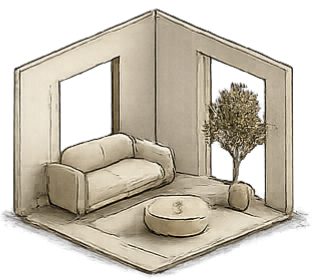
Space planning is the foundation of every successful residence, yet it is often the most overlooked because its intelligence is invisible in finished photography. No one photographs a floor plan, but the floor plan determines whether a home truly supports the people living within it.
Spatial Intelligence considers architecture, layout, circulation, proportion, and functionality to create spaces that feel intuitive and purposeful.
We design around the way you cook, gather, work, rest, and connect, creating homes that are functional, adaptable, and aligned with the experiences that matter most.
Beautiful homes begin with beautiful floor plans because every decision that follows is built upon them.

Sensory Design
Every room makes an impression before anyone can say why. It feels comfortable, inviting, or slightly off, often within the first few steps inside.
Sensory Design is how we shape that impression on purpose, through light, sound, texture, temperature, and the way one room opens to the next. Our approach is informed by neuroaesthetics and biophilic design, which look at how people respond to light, pattern, and the natural world.
In practice, this shapes a set of decisions we make deliberately rather than by default.
Orientation, glazing, and the way a room changes from morning to evening.
Ceiling heights, room dimensions, and the relationship between one space and the next.
What you see on entering a room, and where the eye is given somewhere quiet to land.
Separation, soft surfaces, and the ability to find a quiet room when you need one.
Views, planting, natural materials, and the patterns found in the natural world.
Palette and finish chosen for the mood a room is meant to hold.
None of this is applied as a formula. Every one of these decisions is weighed against the household it is being made for, which is why two homes built on the same principles rarely look alike.
Light is considered from the earliest stages of design. Window placement, orientation, daylight, glare, and the transition to artificial light throughout the evening all influence how a space is experienced.
We consider natural and artificial light together, creating environments that respond to the changing needs of the people who live there throughout the day.
Material Integrity
The materials within a home shape more than its appearance. They influence how a space feels, how it ages, and how it performs over time.
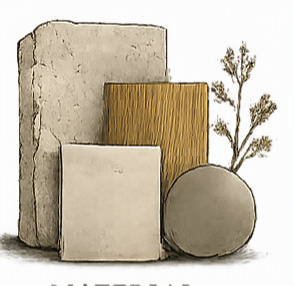
Material Integrity is our approach to selecting finishes and materials based on quality, craftsmanship, durability, environmental impact, and their relationship to the people who live with them. We consider how materials work together as a complete system, how they interact with light, space, touch, and time.
Whenever practical, we prioritize natural, low-VOC materials and finishes chosen to age beautifully over time. We believe materials should perform with integrity, not only in how they look, but in how they support everyday living.
Thoughtful material selection is not about compromise. It is about making informed choices that favor cleaner interiors, lasting quality, and materials that perform with integrity throughout the life of the home.
The materials we bring into a home are selected for more than appearance. We consider what they are made from, how they affect the indoor environment, how they perform, how they age, and what it will take to maintain or replace them over time.
Plaster and limewash interact beautifully with natural light, creating subtle variation that conventional painted surfaces cannot replicate. Depending on the product and application, mineral-based finishes can also offer high vapor permeability and lower-emitting alternatives to many conventional wall finishes.
Oil and hardwax finishes penetrate and protect the wood while allowing its natural character to remain visible. Many can be maintained or repaired locally rather than requiring an entire floor or surface to be stripped and refinished.
Limestone, marble, travertine, and other natural stones bring variation that cannot be manufactured into perfect repetition. We select them with an understanding that natural stone will change with use, developing a patina that becomes part of the character of the home.
Unlacquered brass and other living finishes develop a natural patina through exposure and use. Instead of treating those changes as imperfections, we consider how the material will age and whether that evolution is appropriate for the home and the people who live there.
Homes that give something back
There is a particular quality the finest homes share that has little to do with scale, budget, or style. They simply feel good to live in.
Threaded through all three layers is one question: does this home make everyday life feel easier, calmer, and more like yours?
It is not a checklist or a certification. It is the lens through which we consider the spatial, material, and sensory decisions that shape the experience of home.
It asks:
The philosophy grew from a simple understanding: our homes are not just the backdrop to our lives. We interact with them every day. The materials that surround us, the light we wake to, the spaces we move through, and the way our homes accommodate our routines all contribute to our daily experience.
Because creating a beautiful home is only part of the goal.
Creating a home that contributes to the quality of your everyday life is what matters most.
